Celebrating Success

Sidis in Gujarat celebrated the historic win of Barak Obama, the man of mixed-race African-American, as the 44th President of America. These small communities of people of African origin felt one with the president elect.  Though they have completely assimilated into the local communities of Gujarat, Karnataka, Andhra Pradesh and Maharashtra, Sidis still yearn for their identity.

Tracing their journey to the west coast of India, it is likely that their predecessors may have come as slaves, or may have been traders, or even sailors who voluntarily settled on the land.

“‘Tracing the route’ is, perhaps, a bit exaggerated. There are quite a few good historical studies about the East African slave trade and its range in the Indian Ocean world, which give some clues about the areas from where slaves were drawn as well as about the geographical shifts of the recruitment areas over time. They also tell us that the numbers of the slave trade never even approximated those of the transatlantic slave trade from West Africa to the American continent,” says Prof Helene Basu, a leading authority on Sidis.

“ In the 13th and 14th centuries, slaves were mainly drawn from lower Egypt, Ethiopia, Somalia and Sudan – the Nile area. Many of them ended up being so-called ‘slave-soldiers’ in the armies of conquerors and Sultans all over the Islamic world. After the 16th century, when the Europeans, specifically the Portuguese, entered the scene, slave-trade routes moved further south along the East African coast, as far as Mozambique. Slaves were drawn from the hinterland of the coastal regions, such as inland Tanzania, Malawi or even the Congo,” she adds.

According to her, Zanzibar emerged as the hub for the distribution of African slaves mainly to Arabia, southern Persia and western India in the 19th century. “About three quarters of the population of Zanzibar consisted then of slaves serving the aristocracy and wealthy traders. Even after the nominal abolition of the slave trade by the British, a small number of male and female African slaves continued to be shipped to the western coasts of South Asia, especially to Makran and Gujarat, where they were mostly employed as servants and bodyguards at the courts of local rulers.”

Today, especially in Gujarat, where there are only 10,000 of them, Sidis have merged with the masses and identifies with the urban-working class quarter. A fragmented East African Muslim community of mixed ancestry, Sidis speak Gujarati and Kutchi with only a few Swahili/Bantu words and expressions that is said to be mostly associated with their Sufi ritual dances and music.

Thanks to Western anthropological and historical interest in the various Sidi communities, they are going global.

Interesting Facts

Kerala, Karnataka and Andhra Pradesh celebrate State Formation Day on November 1.

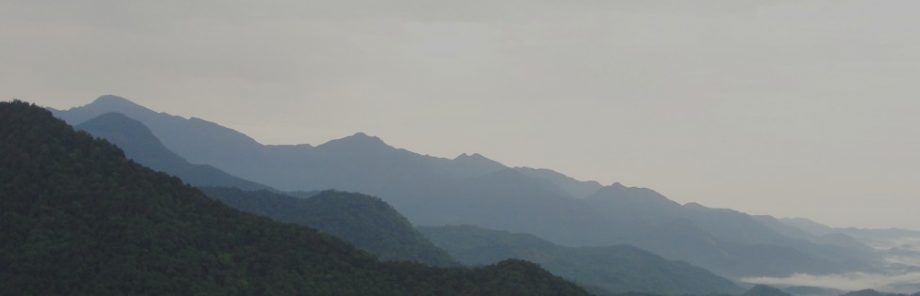
Here are some interesting facts that I came across about Kerala:

1. Kerala was named as one of the “ten paradises of the world” and “50 places of a lifetime” by the National Geographic Traveler magazine (In 2008).

2. Kerala is one of the few regions in the world where communist parties are democratically elected in a parliamentary democracy.

3. UNICEF and the World Health Organization designated Kerala the world’s first “baby-friendly state”.

4. Kerala’s road density is nearly four times the national average, reflecting the state’s high population density. Kerala’s annual total of road accidents is among the nation’s highest( Kumar KG (2003). ‘Accidentally notorious’, The Hindu Business Line. Retrieved on (2007)).

5. Interestingly, The Cochin International Airport at Kochi is the first international airport in India that was built without Central Government funds, and is also India’s first publicly owned airport

Riotous Colours

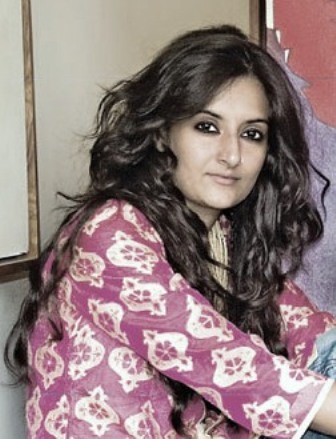
Artist Payal Khandwala has a nice way of expressing her subjects with lines. By Deeya Nayar-Nambiar

“Lines are perhaps the most integral component of form and structure. It is this framework with which the artist visualises a drawing, sculpture or painting. In their purest form, lines come together to plot a narrative; in a non-figurative work they form the building blocks for the subsequent abstraction,” explains Payal Khandwala, a contemporary artist who has carved a niche for herself with her drawings and oil on canvas.

Payal moves her hands with ease whether it is a sketch or a painting and the lines and hues in her work make you think and decode the hidden symbolism. Payal does create an abstract visual language. In fact she constructs a physical reality for a unique intangible moment that is open to interpretation. According to her, “The mark an artist chooses to make ultimately set him apart from another; it is with this vocabulary that he will create a vision that is unique.”

Payal emphasises that when she is painting she tries to distance herself from symbolism altogether, but she does not try to make them narratives. Most of her work is abstract and she makes use of elements like colour, texture, organisation, and sometimes order and geometry.

When she works with the human figure, she tries to keep it uncomplicated. “If it is the face that inspires me, then that is all I include. I don’t like to put in a social, political or gender context into my work,” she explains. But what inspires Payal as an artist? Very thoughtfully she puts it to “many things” – urban landscape, cities like Mumbai and New York where she spent her formative years, textiles, old peeling walls, colours, textures, human forms that surround us.

But Payal is a loyalist when it comes to her colours. She says her palette is an integral part of her painting vocabulary and the slight shift of colours – glazing and making it vibrate to create a visual sensation – is central to her work. In fact she feels that controlling colours allows each painting to have its own mood.

Payal is an art and textile designer from SNDT in Mumbai and holds an honours degree in fine arts and illustration from Parsons School of Design in New York. She also got a diploma from Metafora, an international workshop for contemporary art in Barcelona. To some extent a background in textile design continues to influence Payal’s work. “I’m very receptive to vegetable dyes and Indian textiles that have such a rich and varied history. I tend to retain what inspires me and it forms part of my visual memory bank,” she says.

Payal also likes to experiment in order to break from the monotony of grayscale with dash of colour here and there in figures, adding elements of fun and humour to them. This gives a relief to her work as she tries to develop themes she is not comfortable with. This is evident from the way she has interpreted the Kamasutra in a playful sort of way, keeping the scale of the drawings small true to the miniatures but flooding it with colour.

Talking about her drawings she says, “The subject often determines this choice of line. Gestures, contours, movement have the power to change lines. The medium and scale allow spontaneity and chance and gives the map texture and weight.”

Similarly, her oil on canvas is intrinsic to cultural influences. “Without adhering to the strict formalism of tradition, the work strives to explore a new vocabulary to communicate the emotion behind an experience and to replace what recognisable symbols ordinarily represent.”

Of course, drawing and painting needs both patience and perseverance since no idea can be captured in a day’s time. And beyond that? “I’m just happy to continue doing what I’m…I try not to make many plans. This way I don’t have to break them,” she signs off.

Published in btw, Chitralekha Group

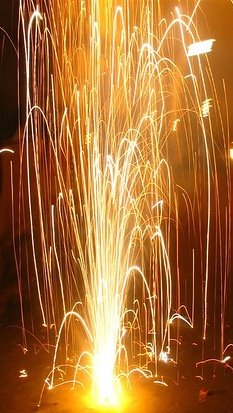
Interesting Facts: Diwali Special


Happy Diwali

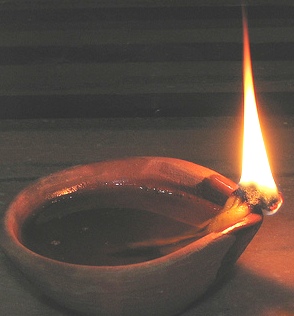
It’s interesting to know that Diwali is a universal festival. From the name to the practices, celebrating Diwali differs from state to state and country to country. Yet they all have the lamp that lights to bind them into a family.

1. As the knowledge of Sanskrit diminished, the word Deepavali was popularly modified to Diwali, especially in northern India

2. It is believed that Diwali is the day Lord Shiva accepted Shakti into the left half of the form and appeared as Ardhanarishvara (half man, half-women)

3. There is a legend that Diwali commemorates the killing of Narakasura, an evil demon by Lord Krishna’s wife Sathyabhama

4. Did you know that Sikhs also celebrate Diwali to commemorate the laying of the foundation stone for the Golden Temple in 1577. It is also known as Bandi Chhorh Divas and they illuminate their gurdwaras and homes with Deewé (earthen oil lamps) or candles

5. Lord Mahavira, the last of the Jain Tirthankaras, attained nirvana on Diwali day at Pavapuri. According to Jain tradition the chief disciple of Mahavira, Ganadhar Gautam Swami, also attained complete knowledge on this very day, thus making Diwali a really special occasion for the Jains to celebrate

6. In Malaysia, Diwali is known as ‘Hari Diwali’(except in Sarawak & Federal Territory of Labuan). The festival is also celebrated in the Caribbean, especially in Trinidad and Tobago and Guyana. Believe it or not, Diwali is a public holiday in these countries like in India

7. In Nepal, Diwali is known as Tihar and celebrated during the October/November period. Interestingly, on the fourth day Yama, the Lord of Death, is worshipped and appeased

8. Thailand celebrates Diwali under the name of Lam Kriyongh during the same time. Diyas (lamps) made of banana leaves are made and candles are placed on it along with a coin and incense

9. According to the great epic ‘Mahabharat’, it was ‘Kartik Amavashya’, the time Diwali is celebrated, when the Pandavas returned after twelve years of banishment

10. It is also said that on this very day Lord Vishnu rescued Goddess Lakshmi (and married her) from the prison of Demon king Bali and for that reason Goddess Lakshmi is worshipped on the day of Diwali

11. In Mauritius, Diwali celebration is an age-old tradition. It holds special significance for the natives, who believe that Diwali has been celebrated even long before the return of Lord Rama from 14 years of exile and his coronation as the king

12. Diwali celebrations were held in the White House in 2004, the first festival to be marked after US President George W Bush’s re-election

13. On the auspicious day of Diwali, Swami Dayanand Saraswati, founder of Brahma-Samaj, took Samadhi

14. Kashmiri Pandits have been celebrating Diwali for ages now. It is one of their oldest rituals, and in the scripture (Nilmat Puran) Diwali was called Sukhsuptika (means to sleep with happiness)

15. One of the unique rituals that makes Diwali in Orissa different from other parts of the country is the practice of calling upon the spirits of one’s dead ancestors