Knocking on Heaven’s Door

Alienation is a deeply individual feeling that can be overcome by indexing it to self esteem, self belonging and self worth.

By Deeya Nayar-Nambiar

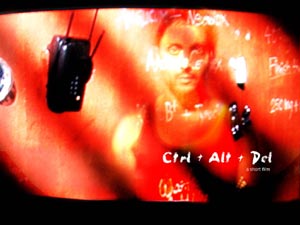
Everybody has a story to tell; so does Kabir. He has been searching for the perfect way to die. This has taken a long time and tonight is the night. Home is the place where he decides to take his life and he mixes his last cocktail for a smooth way to exit…His books, his things, everything is filed and tagged, marked with ‘Post-it’, ready to be passed on to its new owners. His belongings witness the trail of events as mute spectators. As he takes the final plunge in a methodical manner, both eager and tentative, the telephone in his apartment rings. This is what the movie Ctrl+Alt+Del, available only through Reliance mobiles, has to say. But he is not alone. He just represents many such Kabirs around us. While we get to read about some who have taken their life after failed love, there are others who have lived a successful life after overcoming that spur of moment.

In a fragmented modern world where time for each other is ‘virtual’ and the rat race is ‘reality’, alienation has got the better of the vulnerable. These meek individuals can be anyone – married, single, old, or teenagers. They take time off to party or meet over a cup of coffee. But most of the time they come in exhausted, leaving little space for communication, thus hampering the process of building a stronger bond. The desire to connect remains unfulfilled and in the meantime a sense of emptiness and loneliness grips them. And despite the success, loneliness, followed by alienation, is the end product.

The result is “a dramatic contrast, death represents the diametric opposite of success and its trappings.” For instance, take the character of Kabir. “Kabir is a man who believes in the perfectness of things – perfect friend, perfect product, perfect service, the very tools that have made him successful also aid his decision to find the ‘perfect way to die’,” says Saurabh Gupta, director of Ctrl+Alt+Del. Perhaps by being extremely sensitive and diligent one tends to be a mismatch in this society. In fact, as actor Rahul Bose who gave life to the character of Kabir adds, “He is sensitive, he is intelligent and such people are unable to deal with the cruelty of life. Such people see or look out for purity, innocence and love in society.”

Then the question remains: You have everything and everyone, but why still alone? Studies have shown that feeling lonely can be a healthy emotion and choosing to be alone or being in solitude can be enriching indeed. But experiencing loneliness will be to feel overwhelmed by an unbearable feeling of separateness at a profound level, which can manifest in feelings of abandonment, rejection, depression, insecurity, anxiety, hopelessness, unworthiness and meaninglessness. If ignored, they may cause hindrance and serve to prevent development of healthy relationships and lifestyles. Gradually this leads to alienation – a feeling of separation or isolation. May be that is the story of many a senior citizens, who have well-settled children in different parts of the world, a bungalow to live in with a huge lawn in backyard, but only a dog and gardener for company.

According to sociologists, alienation refers to the individual’s estrangement from traditional community and others in general. That is, in the present world where the society is not close knit, individual relationships become shallower. Indeed, we can withstand the situation for some time. Yet, mind you, we cannot battle it out always and then feelings like loneliness, solitude, and alienation will encourage depression, anxiety and other mental illness such as schizophrenia and neurosis. And in extreme cases the mind takes a suicidal bend.

Statistics claim that in India over 1,00,000 persons commit suicide every year. The reasons may be many. Dr Lakshmi Vijayakumar, a member of WHO’s (World Health Organisation) International Network for Suicide Research and Prevention feels, “The media sometimes give intense publicity to ‘suicide clusters’ – a series of suicides that occur, mainly among young people, in a small area within a short period of time. These have a contagious effect especially when they have been glamorised provoking imitation or ‘copycat suicides’. As the HOD of department of psychiatry of Voluntary Health Services in Chennai says, “This multi-dimensional malaise with social, religious, cultural reasons, alcoholism or personality disorder are driven by a triad of emotions – loneliness, helplessness and hopelessness, is preventable since there is process time between thought and action.”

Yet in spite of a strong family support system, friends and loved ones, young people continue to kill themselves because we fail to diagnose the real malaise. “The concept of urban tribes, city slickers who stick to small cohesive groups instead of socialising with the larger world, is a by-product of an inward looking society that looks to reinforce the very stereotypes (caste, class, pedigree) it has abandoned, albeit in a different form,” says Saurabh Gupta.

May be to some extent with the advancement of technology the human element has started taking a backseat for the rich and affordable class of society. And often it is the impersonal voice of a customer care service that gives you the much needed company as you get alienated from everything and everybody around. At some point of time the desire to be known and the feeling of being wanted makes you press Ctrl+Alt+Del just as you can do with a computer. Is it that alienation is a state you want to be but you cannot be in?

“It is a deeply individual feeling and no human being would feel alienated if indexed to self-esteem, self-belonging, self-worth and such other,” observes Rahul Bose. But it is necessary to ensure that once smitten by such feelings you do not surrender to it. The day we are able to detach the stigma surrounding a ‘failure’ and the emphasis laid on being ‘successful’, with professional counselling and support gravity of alienation can be overcome. Also before you reach a point of being alienated or succumb to loneliness get yourself occupied in things that you love to do best – may be join a club, pursue a hobby, or even play with your pet. Feeling alienated is not an end. The day this is realised you can begin your life afresh.

Indicators

    • Experiencing low self esteem

      Feeling estranged in a crowd

      Feelings of being either superior or inferior to the surrounding

      Feeling reluctant to make changes or try new things

      Feeling upset about why no one knows how isolated you are

      Feeling empty, depressed and in extreme cases suicidal tendencies

Published in February 2007, btw of Chitralekha Group

Split Wide Open

Seance on a Sunday Afternoon is collection of short stories about emotions, situations and circumstances that reflect the little nuances of life. By Deeya Nayar-Nambiar

Set in the modern society of sex and the city, hard-pressed for time, every character is self-indulgent. Shinie Antony pens her stories mysteriously and mischievously like the contemporary artist who paints with bold brush strokes to bring out the symbolism and meaningfulness.

Giving the reader a slice of urban society with its confluence of the dos and don’ts, Seance on a Sunday Afternoon is a collection of short stories that reflect the little nuances of the lives, of human emotions, people in queer situations and circumstances. The stories are a trail of words and word play, poetic at times and prose otherwise.

Shinie lives through the characters, springing them to life to tell their tales as if in flesh and blood. Her bold writing style is not only her freedom of expression but also an expression of bold and sensuous themes on a lighter note. If one sentence provokes laughter, the other moves you to tears.

Even the harsh realities of life as a breast cancer patient, L finds a new meaning to her lost beauty. Elsewhere, a widow re-marries but still cannot come to terms with her first husband’s death. Everything is handled delicately.

Stories like ‘The Sofa’ and the ‘Seance On A Sunday Afternoon’ bring out the feelings of old people and the young, their memories, loneliness, detachments and attachments. In the process of writing, Shinie brings to life inanimate objects such as the sofa, fan and cancer.

Shinie’s tryst with writing is not new. As a journalist she polished her skills in imaginative and intuitive writing and has not looked back since her ‘Somewhere in Gujarat’ and ‘A Dog’s Death’ bagged the first prize in the Commonwealth Short Story Competition in 2001 and 2002.

Fascinated by the dark side of life, and an interest to keep pace with the Net savvy world, Shinie has also attempted to write like a blogger, uses sms language and similies, to explore the mind of a housewife who wants to connect with others in the cyber space.

Indeed, to understand the hidden facts of relationships and life in a city, the reader as a “common man” should sharpen his intellect to decipher or interpret the wit and the beauty of the language and idiom of Seance on a Sunday Afternoon.

Séance On A Sunday Afternoon

Shinie Antony

Rupa & Co, Rs 195

Published in June 2008, btw of Chitralekha Group

Interesting Fact: August 2008

There has never been a dearth of facts…

1. Saturn is the only planet in our solar system that is less dense than water. If you could build an imaginary gigantic bathtub, Saturn would float in it says NASA

2. Basenji, smallish dog with a silky copper coat, does not bark. Instead, it yodels when it gets excited

3. Fossilised tree sap or resin must be at least 30 million years old to be recognised as Amber. Interestingly it is considered as one of the most popular gemstone in jewellery

4. The 4 minutes 33 seconds (4’33”) musical piece is famous for its no sound at all. Written by the American composer John Cage, it is a piano piece where a pianist sits at the piano and plays nothing for exactly 4 minutes and 33 seconds

5. One of the most important inventions in history was the rubber band-powered airplane, the planophore. French scientist Alphonse Penaud astounded everyone by flying a rubber band-powered aircraft for 131 feet. Indeed it was the first recorded flight of an inherently stable aircraft

6. Nepal is the only country without a rectangular flag as theirs look like two pennants glued on top of the other

7. The most filmed story of all time is Dracula followed by Dr Jekyll and Mr Hyde and and Oliver Twist in the second and third position

8. Libra, the Scales, is the only inanimate symbol in the zodiac signs

9. Pingu a swiss animated children’s television serial has adventures that are suitable for broadcast in any language, because the closest thing it has to a dialog is in a non-language called “Penguinese”

10. Nasturtiums have long been prized for their nutritive value. A nasturtium leaf is as high in vitamin C as a lettuce leaf

By Deeya Nayar-Nambiar, Published in SigningOff column, btw of Chitralekha Group

Radio Ga-Ga

Making a conversation before millions of listeners is not as easy as it appears so training is a must to become a radio jockey. By Deeya Nayar-Nambiar

Headed home after a day’s work and caught in the usual traffic snarl can drive anyone up the wall. But thanks to radio jockeys on FM, the journey can never be a drag. The friendly voice gives company to the lonely, alerts on traffic jams or the weather, jokes and music to see you safely home. You can also interact with them and feel good about being heard. Their words often act as a quick solution to those in despair.

With the FM radio boom – the government has sold 338 frequencies across 91 cities in the second phase of FM radio licensing – we will soon have a lot many radio channels in our kitty. As a result, the job market for RJs has really opened up. “When you offer 10 channels in a metro and four in smaller towns, the only way to survive will be through channel differentiation. Research shows that 70 per cent of listeners can’t differentiate between one FM channel and another based on content. This definitely will have to change,” says Nisha Narayanan, media consultant for radio and TV at exchange4media.com. It is the RJ who often makes the difference to a radio station, slowly evolving as a household name and a constant companion from dawn to dusk and through the night.

“Radio jockeying is an art. It often starts as a hobby that is pursued with passion and becomes a profession gradually,” says Darrpan Mehta, former RJ and now managing director and CEO of Sugar Mediaz. It is the voice that stimulates and keeps the listener arrested. Spontaneous, friendly, witty, the RJ ably speaks on anything and everything under the sun. They laugh at their blunder and make you laugh at them too. Their zingy talk and music spice up your life in general. “Making a conversation before millions of listeners is not as easy as it appears. It is the presence of mind and the ability to say things which would capture the interest of people that counts,” says Tarana, RJ at Radio One 92.5 FM.

Radio jockeying may sound a glamorous and easy job, but a no gyan, chalta hai attitude will reach you nowhere. As Tarana puts it, the listener respects you for the opinions you feel strongly about. “People like to hear. It is evident from the way they recognise us by voice. They mail, sms, call and speak to us as if they are our best friends! Though the relationship is very professional, still it is nice to find them very familiar,” she adds.

It is often said that you should have a good voice. It is definitely an asset but primarily the listener should love to listen to you. As the experienced hands in the field observe, for a good RJ it is essential that (s)he has much more than a good, clear modulated voice and diction.

An aspiring RJ should have the right attitude, be well read, should research and script the programme and have the ability to speak on anything and everything besides being smart. You must create magic with presence of mind and a sense of humour. Also, you build a relationship with your audience if you know the art of laughing at yourself for the goof up being aired. Often the programmes are impromptu and a good RJ should know how to keep the show going – making it interesting, perfect, sounding as if conversing and leaving the listener wanting more.

According to the doyen of radio jockeys Ameen Sayani, “The essential qualities to be developed by RJs are clarity of speech and thought, natural informality (chatty) without sounding faked or hammed and building up one’s own distinct personality for if you start aping anyone – or following the general trend – you’ll never succeed.” He lays special emphasis on doing enough homework for each session and knowing your song schedule in advance.  “Make notes, but avoid reading from them and you must always sound as if you are conversing with listeners,” he advises. “Be and sound sincere for if listeners stop believing in you, they’ll never listen to you again,” he warns.

It is equally important for a RJ to be tech savvy and have knowledge of the contemporary language usage. According to Darrpan, “Language is necessary to keep with popular tastes. Some radio stations are going Hindi like Go 92.5 FM that is now called Radio One 92.5 FM.” At such a time an RJ who is well versed in Hindi and English will have an edge over others. In today’s competitive environment, RJs can survive only if they are professionally trained. “A RJ is as much a professional as a doctor or engineer.

Training gives you a more methodical approach to voice acting, dubbing, radio programming and other finer nuances of radio,” says Darrpan. Such training helps your growth prospects. An RJ may have a shelf life, but look at it as being a radio professional that would help you to take up production, anchoring television programmes, becoming voice artists, and move into other fields. “It is certainly good to join a reputed training facility/course that teaches complete radio presentation, including getting to know how to handle hardware,” agrees Sayani.

The industry does not have many training institutes. Primarily, you have to be a graduate. “You may have the talent but do not know how to sell your voice. Training takes care of all these factors. Once trained, the institute helps with placement”, says Tarana. A fresher may earn Rs 10,000 and as you become popular and establish yourself as a brand, you can quote your price. After all, radio anchoring is all about creating a signature style, getting branded and learning to live up to the image. “The success or failure of a channel is very much dependent on it,” says Darrpan.

A Few Names

Encompass Institute of Radio Management (EMDI) offers a one-year diploma in radio management and three month radio jockey certificate course

All India Radio offers a two months course

The Mudra Institute of Communications, Ahmedabad (MICA), conducts exams through CAT(IIM).Offers internship with FM Radio channels as part of its one-year graduate programme in broadcasting management

The Xavier’s Institute of Commumnications, Mumbai.

Sugar Mediaz offers a two and a half months Voice Training Workshop for those aspiring to be Radio Jockeys.

Published in July 2006, btw of Chitralekha Group