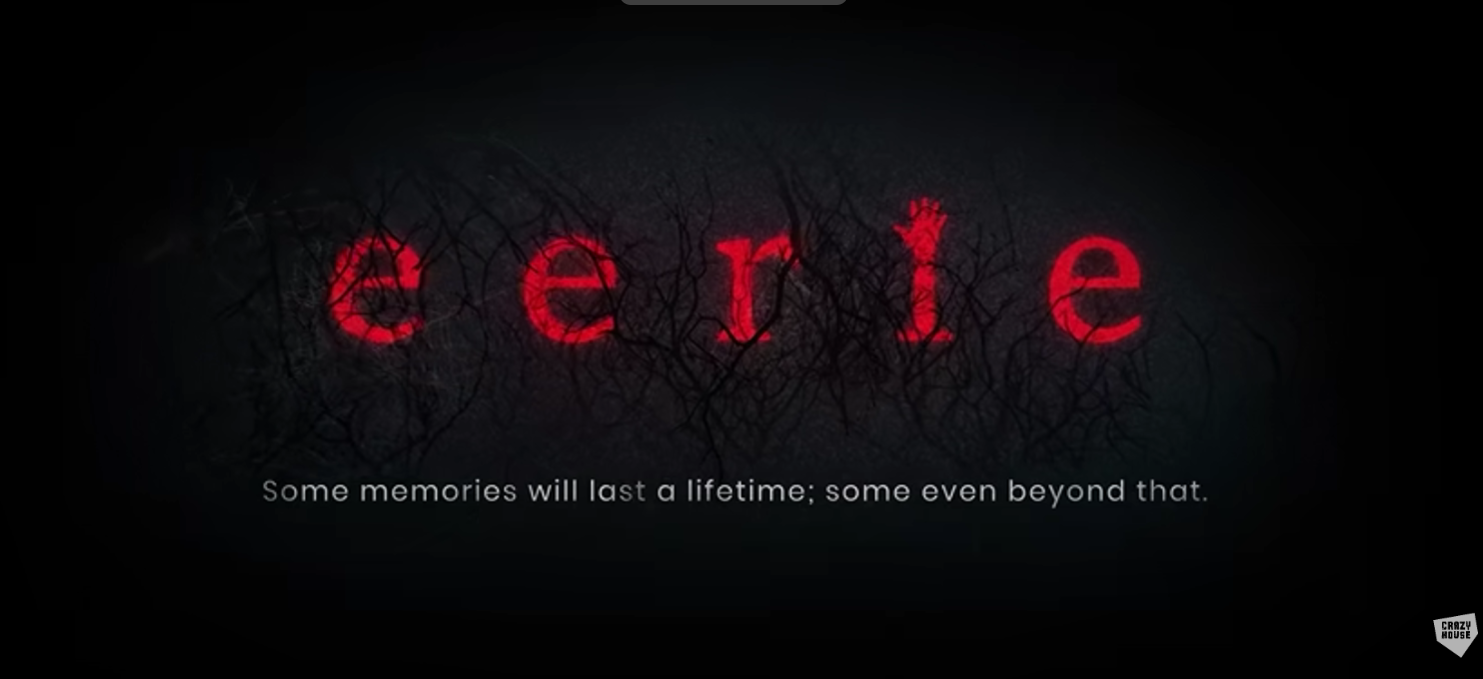
I recently took the time to watch Eerie, a Malayalam short film shared in a school group by a friend who plays the role of a common man in it. The title itself is intriguing enough to set the dark, atmospheric tone of the film. With a runtime of about 27 minutes, Eerie is framed against the brooding backdrop of a Kerala ancestral home, somewhere around the Malabar region. The film follows a family dealing with an ancestral curse, an unmarried aunt, and a child who accompanies his widowed mother from the city to their ancestral home for a vacation and experiences the local rituals and customs.
When Fear Becomes Silence
As the events unfold, the child takes centre stage. He is forced to fight the demons of his own fears born from narrated stories, his inability to comprehend the circumstances he is dragged into, and the absence of a supportive ear. What becomes of a happy child? Here, the past reflects heavily in the present, ultimately raising urgent, uncomfortable questions:
Why don’t we speak? Why don’t we seek help? Why do we suffer in silence? And why do we replay these lingering memories?
Master Heyden and Rajeev Pillath deliver exceptional, grounded performances, which would not have been fully realised without the chillingly cold approach delivered by Nisa NP. Themes of fear, toxicity, helplessness, childhood trauma, broken trust, and the inner struggle of the psyche are explored with considerable sensitivity in the script and conveyed powerfully through the performances.
Tradition, Power and What Remains Unseen
From a sociological lens, the film handles its setting with profound depth. It is structured within a framework of the absence of a father, the boy accepting silence as a solution to problems, and the mother and child being thrust into a rigid environment governed by deep-seated patriarchal authority. Within this structure, the antagonist functions by exploiting patriarchal blind spots under the guise of maternal safety and using trust as a shield. The context of the Goddess, Theyyam, and the rituals surrounding the festivities, alongside stories of the sacredness of the Goddess’s room, the photographs of the great-great-grandfathers, and the unexplained gender norms, are woven as shared stories and cultural visuals. Because not everything said is shown, this creates a brilliant tension between the overt performance of tradition and the covert realities of domestic life. The family obsessing over the abstract ancestral curse remains systematically blind to the acute trauma happening in its shadow.
What truly elevates Eerie is the way writer and director Dileep VT approaches its subject. Rather than relying on graphic depictions, the narrative gently peels back layers to hint at a grave violation of a child’s innocence and a breach of bodily boundaries. By focusing on the psychological aftermath – the confusion, the burden of keeping a secret, and the total breakdown of familial trust – the film sheds light on a dark reality that society often chooses to ignore or suppress.
The Sound of What Remains Unsaid
However, while the narrative relies on a quiet, slow-burn tension, the background music often speaks louder, creating an interesting balance. At times, it almost feels as though the music itself is speaking. The other characters also contribute to bringing to life different aspects of a deeply sensitive and less-discussed social theme.
Eerie has already received recognition beyond its home ground and is an award-winning short film that continues to garner attention across the international festival circuit. I conclude on the note of Dileep’s craftsmanship in this psychological thriller that delicately traces the fragile spaces of the human mind and the fleeting moments between life and death.
Eerie premiered on the Crazy House Music Labs YouTube channel. The film is available with English subtitles. Link.
© Deeya Nambiar, 2026
#ScribblesAndGlimmers #DeeyaNambiar #EerieShortFilmReview #Dileep VT #CrazyHouseMusicLabs


