Author: Deeya Nambiar

I believe in taking every day as a learning phase, and exploring my writing skills. I have enjoyed the challenges as a journalist, content writer and college lecturer, and at the moment am living life analysing the extraordinary in the ordinary!

Absolute Freedom, Is It?

Absolute freedom

Absolute freedom? How often I have heard people mention about their need for absolute freedom. To define it, I quote some of them, “there is no restriction or control and one is free to conduct life her/his way, doing her/his things, and the way s/he wants to do them.” In short, they do not want to be obliged to anyone but be their own masters.

Apparently, “each of us is trapped within our own mind, unable to feel anything but our own feelings and experiences.  It is as if each of us is trapped in a dark room with no windows.” Says a scholarly article.

I recollected the concept of alienation and its repercussions that I had read in detail for an interview I was to conduct once as a  journalist. Also, I remembered the oft quoted line, “man is a social animal”.

To add to the lot, “existentialist author and philosopher Simone de Beauvoir notes that as children we shoulder no responsibility; we live in a ready-made world with ready-made values. As we mature and become acquainted with our freedom we can begin to take matters into our own hands. However, many of us revert back to our childhood ways, trading freedom for security.”       ( http://www.newphilosopher.com)

I wonder how many of us, who have used the term absolute freedom, have given a thought to the usage itself. Referred in a casual manner, most of us may not even understand its real significance.

There are mothers who have told me that they have kept a day of absolute freedom from children and responsibility, husbands who set out on a boy’s day out a week, and men and women who sleep throughout the day on a weekend.

True, it is a feeling we often look forward to, little realising we are still submitting and surrendering ourselves to various factors. Probably, sneaking into the absolute freedom enjoyed by some others, who may be, the means to enjoy our absolute freedom.

When I asked some of my friends and acquaintances if they would like to have their absolute freedom forever, they hesitated. A few days of life debarred from responsibilities and attachments may be a good way of rejuvenating and getting one’s life organised. Forever, indeed nothing is forever! 

How’s Life?

Photo0190

Lame I feel

Looking at life

Adornment negligent

Way too real

Raw wounds and pains indefinable

How palpable

Smile still lingered

Zest to living

Surpasses weaknesses

And my friend lived fighting

Wanting to make her memorable

While a few found pleasures

Others took her seriously

Smile still lingered

As I fathom the question

‘So, how’s life?’

And find myself answering

‘Good, in fact excellent’

Then when I see their expression

I long to interpret

Smile still lingered

Wonder who understood my friend ‘life’?

If happy I conjure

If unhappy I blame

Definitions simple conjectures

Our life through their eyes

Way too real

Adornment negligent

Looking at life

Lame I feel….


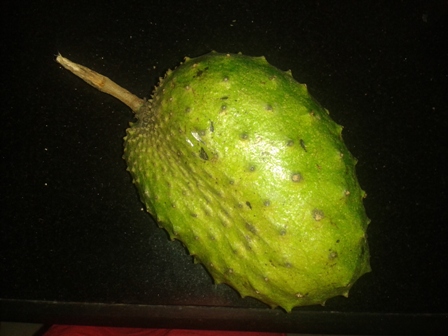
Taste of Soursop

soursop

The fruit with prickles stocked in large quantities in the cart caught my attention. Though it is the season of  jack fruit, the fruit in offering looked a distant cousin of the same.

A close look spoke a different story all together. And the fruit vendor insisted that I buy one. To my ignorance, he added a chapter on the significance of the fruit, locally (Kerala)  referred to as ‘attichakka’, and “it is a healthy fruit for cancer patients.” As the Malayalam (language) name goes, the fruit is in fact a variety of jack fruit.

With a thick crust and custard apple like inner formation of white creamy edible pulp surrounding seeds, the fruit left a mixed taste of a tangy and citric custard apple.   Of course, the fruit did not fancy my palate, but my inquisitiveness led me to search. My quest landed me on Google, and with the information in hand I clicked the name ‘guyabano’. A further search led me to its English name ‘soursop’, called so because of its sour or rather acidic taste. In fact, its names were endless.

A native of South and Central America, the Caribbean and the Saharan parts of the African nations, soursop’s adaptability to the tropical climate has brought the fruit to the Southest Asian countries as well.

As a rich source of carbohydrates,  vitamins (mainly C & B) along with minerals such as potassium and dietary fibres, the fruit has become a staple with ailing patients. According to a well researched site , a research conducted in 1976 found a chemical in guyabano or soursop that is “10,000 times more powerful and potent than a drug used for chemotherapy called Adriamycin.”

To quote another site, “soursop consists of annonaceous acetogenins, which might stop the development of damaged cells just before they could become cancerous. {Also} soursop has demonstrated specific guarantee in eliminating cancer of the breast.”

Researches have also found its significance in various other treatments that include  regulating blood sugar, controlling hypertension, preventing anemia, and relieving pain and inflammation.

A fruit is a fruit anyway. Little wonder, the commercial market has utilised soursop to flavour candies, make drinks, and other  sweetmeat. Someday I hope to taste its other delicacies!

Going back to the fruit vendor’s information, the fruit comes to the market and gets sold out fastest, especially with the Regional Cancer Centre working in full swing and the families of patients taking good care of them. I looked at the humble fruit that hardly spoke but works wonders, definitely.

Father

fathers day

My name, ‘Deeya’, has always fascinated me. Etymologically, the word has its roots in various languages. But my father named me ‘Deeya’, inspired by the Hindi word ‘Diya’, which means ‘lamp’.

I grew up listening to my school teachers, fondly, referring to me as the ‘lamp of the family’; and I travelled with my family where ever my father’s transfers took us, changing schools and accommodating cultures and traditions.

Once on a long vacation, we happened to be in our family home in Kerala, and my father showed me his world of books and writings. There I came face to face with ‘Deeya’, my father’s pseudonym.

A surprise indeed! My father had never mentioned his joy of writing, except that he enjoyed reading my creative ventures. To help me improve my writing skills, he encouraged reading, bought books, gifted diaries, and advised me to make them my best friends.

Occasionally, he would enquire about my latest diary entry, and I used to read it out to him very reluctantly. Then it had mattered less to me. Gradually, I found myself sharing every single write up and poem I penned; and he was more than happy to view his opinions and mend.

In fact, my first book of poetry materialised due to his quiet work of passing on the poems to the publisher.

Years have passed by. Nothing seems to have changed. Even today we spend hours over the phone (distances hardly matter!), especially on holidays, discussing news, views, and his critical observation of my writings.

Need to mention, he hopes to see me read and understand the depths of Malayalam literature. To begin with, recently he gifted me an English translation of the great legends of Kerala.

Over a period of time, my relationship with my father has matured from a father-daughter one to a guru-shishya (teacher-student) level of understanding. A teacher, who understands, guides and accepts the student as she is.

I often wonder if I have idealised him. However, I am still learning from his philosophy of life. And I have realised that I am truly his “Deeya”. On this Father’s Day, I salute you, my dear acchan (Father in Malayalam).