Author: Deeya Nambiar

I believe in taking every day as a learning phase, and exploring my writing skills. I have enjoyed the challenges as a journalist, content writer and college lecturer, and at the moment am living life analysing the extraordinary in the ordinary!

Riotous Colours

Artist Payal Khandwala has a nice way of expressing her subjects with lines. By Deeya Nayar-Nambiar

“Lines are perhaps the most integral component of form and structure. It is this framework with which the artist visualises a drawing, sculpture or painting. In their purest form, lines come together to plot a narrative; in a non-figurative work they form the building blocks for the subsequent abstraction,” explains Payal Khandwala, a contemporary artist who has carved a niche for herself with her drawings and oil on canvas.

Payal moves her hands with ease whether it is a sketch or a painting and the lines and hues in her work make you think and decode the hidden symbolism. Payal does create an abstract visual language. In fact she constructs a physical reality for a unique intangible moment that is open to interpretation. According to her, “The mark an artist chooses to make ultimately set him apart from another; it is with this vocabulary that he will create a vision that is unique.”

Payal emphasises that when she is painting she tries to distance herself from symbolism altogether, but she does not try to make them narratives. Most of her work is abstract and she makes use of elements like colour, texture, organisation, and sometimes order and geometry.

When she works with the human figure, she tries to keep it uncomplicated. “If it is the face that inspires me, then that is all I include. I don’t like to put in a social, political or gender context into my work,” she explains. But what inspires Payal as an artist? Very thoughtfully she puts it to “many things” – urban landscape, cities like Mumbai and New York where she spent her formative years, textiles, old peeling walls, colours, textures, human forms that surround us.

But Payal is a loyalist when it comes to her colours. She says her palette is an integral part of her painting vocabulary and the slight shift of colours – glazing and making it vibrate to create a visual sensation – is central to her work. In fact she feels that controlling colours allows each painting to have its own mood.

Payal is an art and textile designer from SNDT in Mumbai and holds an honours degree in fine arts and illustration from Parsons School of Design in New York. She also got a diploma from Metafora, an international workshop for contemporary art in Barcelona. To some extent a background in textile design continues to influence Payal’s work. “I’m very receptive to vegetable dyes and Indian textiles that have such a rich and varied history. I tend to retain what inspires me and it forms part of my visual memory bank,” she says.

Payal also likes to experiment in order to break from the monotony of grayscale with dash of colour here and there in figures, adding elements of fun and humour to them. This gives a relief to her work as she tries to develop themes she is not comfortable with. This is evident from the way she has interpreted the Kamasutra in a playful sort of way, keeping the scale of the drawings small true to the miniatures but flooding it with colour.

Talking about her drawings she says, “The subject often determines this choice of line. Gestures, contours, movement have the power to change lines. The medium and scale allow spontaneity and chance and gives the map texture and weight.”

Similarly, her oil on canvas is intrinsic to cultural influences. “Without adhering to the strict formalism of tradition, the work strives to explore a new vocabulary to communicate the emotion behind an experience and to replace what recognisable symbols ordinarily represent.”

Of course, drawing and painting needs both patience and perseverance since no idea can be captured in a day’s time. And beyond that? “I’m just happy to continue doing what I’m…I try not to make many plans. This way I don’t have to break them,” she signs off.

Published in btw, Chitralekha Group

Interesting Facts: Diwali Special


Happy Diwali

It’s interesting to know that Diwali is a universal festival. From the name to the practices, celebrating Diwali differs from state to state and country to country. Yet they all have the lamp that lights to bind them into a family.

1. As the knowledge of Sanskrit diminished, the word Deepavali was popularly modified to Diwali, especially in northern India

2. It is believed that Diwali is the day Lord Shiva accepted Shakti into the left half of the form and appeared as Ardhanarishvara (half man, half-women)

3. There is a legend that Diwali commemorates the killing of Narakasura, an evil demon by Lord Krishna’s wife Sathyabhama

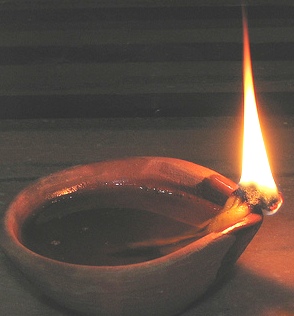
4. Did you know that Sikhs also celebrate Diwali to commemorate the laying of the foundation stone for the Golden Temple in 1577. It is also known as Bandi Chhorh Divas and they illuminate their gurdwaras and homes with Deewé (earthen oil lamps) or candles

5. Lord Mahavira, the last of the Jain Tirthankaras, attained nirvana on Diwali day at Pavapuri. According to Jain tradition the chief disciple of Mahavira, Ganadhar Gautam Swami, also attained complete knowledge on this very day, thus making Diwali a really special occasion for the Jains to celebrate

6. In Malaysia, Diwali is known as ‘Hari Diwali’(except in Sarawak & Federal Territory of Labuan). The festival is also celebrated in the Caribbean, especially in Trinidad and Tobago and Guyana. Believe it or not, Diwali is a public holiday in these countries like in India

7. In Nepal, Diwali is known as Tihar and celebrated during the October/November period. Interestingly, on the fourth day Yama, the Lord of Death, is worshipped and appeased

8. Thailand celebrates Diwali under the name of Lam Kriyongh during the same time. Diyas (lamps) made of banana leaves are made and candles are placed on it along with a coin and incense

9. According to the great epic ‘Mahabharat’, it was ‘Kartik Amavashya’, the time Diwali is celebrated, when the Pandavas returned after twelve years of banishment

10. It is also said that on this very day Lord Vishnu rescued Goddess Lakshmi (and married her) from the prison of Demon king Bali and for that reason Goddess Lakshmi is worshipped on the day of Diwali

11. In Mauritius, Diwali celebration is an age-old tradition. It holds special significance for the natives, who believe that Diwali has been celebrated even long before the return of Lord Rama from 14 years of exile and his coronation as the king

12. Diwali celebrations were held in the White House in 2004, the first festival to be marked after US President George W Bush’s re-election

13. On the auspicious day of Diwali, Swami Dayanand Saraswati, founder of Brahma-Samaj, took Samadhi

14. Kashmiri Pandits have been celebrating Diwali for ages now. It is one of their oldest rituals, and in the scripture (Nilmat Puran) Diwali was called Sukhsuptika (means to sleep with happiness)

15. One of the unique rituals that makes Diwali in Orissa different from other parts of the country is the practice of calling upon the spirits of one’s dead ancestors

Leaving On A Jet Plane

Tour operators as service providers are a traveller’s delight serving dream vacations on a platter. By Deeya Nayar-Nambiar

Ride a camel in Dubai, shop for designer clothes on Bond Street, enjoy the concert at the Sydney Opera House or experience the beauty of the island at the Soneva Fushi Resort and Spa in the Maldives; your wish is their command. Tour operators, a one-stop shop for all your travel needs, have simplified the concept of travel and vacation.

As the holiday season approaches, tour operators bring out exclusive holiday packages and even slash prices to woo the customers. Besides package tours for the hoi polloi, they also offer customised holiday plans for the affluent who demand a five star accommodation, fine dining at exclusive getaways.

At a time when tourism has bloomed into a global leisure activity and the buying and spending power of the consumers is on an upswing, reaching out to your favourite destination is just a matter of planning a trip according to a budget that fits your pocket. Indeed, these service providers are a traveller’s delight who serve dream vacations on a platter and offer all your necessities under one roof.

It takes only a couple of minutes but fix your priorities in advance – the duration of your holiday, the period you are travelling and the budget –  much before you decide to walk into the nearest office of a tour operator. Based on your requirement, they prepare the itinerary and organise everything for your trip.

“In customised packages you do not have readymade itineraries, but we make it as per their requirement and duration. Here the budget comes in last,” says Yogesh Selarka, chief operating officer of RAJ Travel World.

Most of the packages include airfare, airport taxes, food (mostly breakfast and dinner), accommodation and sightseeing. Yet, beside the brochures, inquire and get a clear picture of what the package is inclusive of. Remember, tour operators are only service providers; you have to make a wise buy.

Though runaway inflation has affected many leisure holiday plans of even the upper middle class, to the affluent it has made no difference. At a cost (inclusive of all charges other than the holiday packages) of about Rs 70,000 to Rs 7 lakh, Singapore, Malaysia, Thailand, USA, Australia, UK, and New Zealand are the most preferred destinations. However, “people are open to visiting exotic destinations like Scandinavia, Turkey, Greece, Alaska and Morocco,” says Selarka.

Destinations are a welcome but what entice you are the packages. Kesari takes pride in their Special Interest Tour that is designed taking into consideration the need of a specific segment of people. “This segmentation is done based on various aspects such as age, gender, activities, sports, and adventure etc. For instance, ‘My Fair Lady’ is meant only for women and ‘Second Innings’ for senior citizens. These tours are different from that of the regular tours, they do not have mere sightseeing but also have many fun games, fashion shows, and other interesting activities and that is why they are special,” says Sandesh Sonawale, public relation executive at Kesari. Kesari also offers travel loans for the total tour cost, including airfare; you only need to pay the initial booking amount, which will be refunded once the loan is sanctioned.

Similarly, RAJ Travels offers a Nano series to Far East, Europe and the US, which is an all-inclusive package. Likewise, SOTC, a leading brand of Kuoni Travel Group India, has many ‘Cost Saver’ tours that have been designed keeping in mind the budget of the traveller without compromising on sightseeing and basic holiday needs. However, if you are planning a more high-end customised tour, Kuoni holidays have many a destinations to choose from.

Interestingly, food, especially vegetarian, has been a concern for most of the Indians travelling abroad and tour operators have made it their USP. “We send cooks with our customers to wherever they go. And we provide only vegetarian cuisines including Jain food,” says Jitendra Shah, CMD of Heena Tours & Travels.

In fact RAJ Travels was the first outbound tour company to introduce Indian meals on its Globe Tour Packages, and their concept of ‘caravan kitchens’ serving Indian hot meals in Europe.

“Tour Guides and managers as well as cooks are mandatory additions to our packages. In fact, Cox and Kings have specially stationed Indian chefs at different European destinations,” says Karan Anand, head of business development. Cox and Kings is one of the oldest and reputed travel organisations in India that specialises in foreign exchange and medical insurance assistance as well.

And the point to be noted is travel insurance is a must, say travel operators in unison, but it is not always included in their services. You have to specifically ask the tour operator to get you insured by a reputed company.

With Diwali and Christmas round the corner and summer vacations to follow soon, tour operators are gearing up for business. “Bookings commence well in advance; even for RAJ Travels’ European Holidays the brochures come 8-9 months in advance and enquiries have already begun for 2009,” says Selarka.

Published in September 2008, btw of Chitralekha Group

Knocking on Heaven’s Door

Alienation is a deeply individual feeling that can be overcome by indexing it to self esteem, self belonging and self worth.

By Deeya Nayar-Nambiar

Everybody has a story to tell; so does Kabir. He has been searching for the perfect way to die. This has taken a long time and tonight is the night. Home is the place where he decides to take his life and he mixes his last cocktail for a smooth way to exit…His books, his things, everything is filed and tagged, marked with ‘Post-it’, ready to be passed on to its new owners. His belongings witness the trail of events as mute spectators. As he takes the final plunge in a methodical manner, both eager and tentative, the telephone in his apartment rings. This is what the movie Ctrl+Alt+Del, available only through Reliance mobiles, has to say. But he is not alone. He just represents many such Kabirs around us. While we get to read about some who have taken their life after failed love, there are others who have lived a successful life after overcoming that spur of moment.

In a fragmented modern world where time for each other is ‘virtual’ and the rat race is ‘reality’, alienation has got the better of the vulnerable. These meek individuals can be anyone – married, single, old, or teenagers. They take time off to party or meet over a cup of coffee. But most of the time they come in exhausted, leaving little space for communication, thus hampering the process of building a stronger bond. The desire to connect remains unfulfilled and in the meantime a sense of emptiness and loneliness grips them. And despite the success, loneliness, followed by alienation, is the end product.

The result is “a dramatic contrast, death represents the diametric opposite of success and its trappings.” For instance, take the character of Kabir. “Kabir is a man who believes in the perfectness of things – perfect friend, perfect product, perfect service, the very tools that have made him successful also aid his decision to find the ‘perfect way to die’,” says Saurabh Gupta, director of Ctrl+Alt+Del. Perhaps by being extremely sensitive and diligent one tends to be a mismatch in this society. In fact, as actor Rahul Bose who gave life to the character of Kabir adds, “He is sensitive, he is intelligent and such people are unable to deal with the cruelty of life. Such people see or look out for purity, innocence and love in society.”

Then the question remains: You have everything and everyone, but why still alone? Studies have shown that feeling lonely can be a healthy emotion and choosing to be alone or being in solitude can be enriching indeed. But experiencing loneliness will be to feel overwhelmed by an unbearable feeling of separateness at a profound level, which can manifest in feelings of abandonment, rejection, depression, insecurity, anxiety, hopelessness, unworthiness and meaninglessness. If ignored, they may cause hindrance and serve to prevent development of healthy relationships and lifestyles. Gradually this leads to alienation – a feeling of separation or isolation. May be that is the story of many a senior citizens, who have well-settled children in different parts of the world, a bungalow to live in with a huge lawn in backyard, but only a dog and gardener for company.

According to sociologists, alienation refers to the individual’s estrangement from traditional community and others in general. That is, in the present world where the society is not close knit, individual relationships become shallower. Indeed, we can withstand the situation for some time. Yet, mind you, we cannot battle it out always and then feelings like loneliness, solitude, and alienation will encourage depression, anxiety and other mental illness such as schizophrenia and neurosis. And in extreme cases the mind takes a suicidal bend.

Statistics claim that in India over 1,00,000 persons commit suicide every year. The reasons may be many. Dr Lakshmi Vijayakumar, a member of WHO’s (World Health Organisation) International Network for Suicide Research and Prevention feels, “The media sometimes give intense publicity to ‘suicide clusters’ – a series of suicides that occur, mainly among young people, in a small area within a short period of time. These have a contagious effect especially when they have been glamorised provoking imitation or ‘copycat suicides’. As the HOD of department of psychiatry of Voluntary Health Services in Chennai says, “This multi-dimensional malaise with social, religious, cultural reasons, alcoholism or personality disorder are driven by a triad of emotions – loneliness, helplessness and hopelessness, is preventable since there is process time between thought and action.”

Yet in spite of a strong family support system, friends and loved ones, young people continue to kill themselves because we fail to diagnose the real malaise. “The concept of urban tribes, city slickers who stick to small cohesive groups instead of socialising with the larger world, is a by-product of an inward looking society that looks to reinforce the very stereotypes (caste, class, pedigree) it has abandoned, albeit in a different form,” says Saurabh Gupta.

May be to some extent with the advancement of technology the human element has started taking a backseat for the rich and affordable class of society. And often it is the impersonal voice of a customer care service that gives you the much needed company as you get alienated from everything and everybody around. At some point of time the desire to be known and the feeling of being wanted makes you press Ctrl+Alt+Del just as you can do with a computer. Is it that alienation is a state you want to be but you cannot be in?

“It is a deeply individual feeling and no human being would feel alienated if indexed to self-esteem, self-belonging, self-worth and such other,” observes Rahul Bose. But it is necessary to ensure that once smitten by such feelings you do not surrender to it. The day we are able to detach the stigma surrounding a ‘failure’ and the emphasis laid on being ‘successful’, with professional counselling and support gravity of alienation can be overcome. Also before you reach a point of being alienated or succumb to loneliness get yourself occupied in things that you love to do best – may be join a club, pursue a hobby, or even play with your pet. Feeling alienated is not an end. The day this is realised you can begin your life afresh.

Indicators

    • Experiencing low self esteem

      Feeling estranged in a crowd

      Feelings of being either superior or inferior to the surrounding

      Feeling reluctant to make changes or try new things

      Feeling upset about why no one knows how isolated you are

      Feeling empty, depressed and in extreme cases suicidal tendencies

Published in February 2007, btw of Chitralekha Group