Tag: Blogging

Who Gives Birth to Whom?

mahim “A child gives birth to a mother.” The quote runs below a public work of art on the way along side the western express highway in Mumbai. A prized location, the sculpture of the mother-and-child stands tall, seemingly linking the roads to Mahim, Bandra and Worli-sea link.

It is hard to miss, especially if you are on a religious trip to visit the famed Siddhivinayak temple (Lord Ganesha) at Prabha Devi , St. Michael’s church in Mahim, and the Durgah of Mahimi in Mahim. Each of these places is historically relevant. For instance, while the church is one of the oldest existing Portuguese buildings, the Makhdoom Ali Mahimi’s Durgah is a reminder of the great Sufi saint and scholar who was also the “first commentator of the Holy Quran in India”.

Coming back to the mother-and-child sculpture, I happened to take a sparing look at it once, when stuck at the traffic signal. Appearing to be of a mother holding up her child, the metal sculpture is devoid of any distinct features or facial expressions. Yet, surrounded by the bed of greens, the mother and child cut a happy picture of the nurturer and the nourished.

A few minutes distraction from the traffic snarl, the sculpture and the quote, “A child gives birth to a mother”, kindled my mind. Mother and child – who gives birth to whom? Undoubtedly, each gives birth to the other. Undoubtedly, the mother and child relationship rooting to birth can be correlated to the relationship of a creator and his creativity. Nevertheless, it takes the creativity to give a name to the creator, and a purpose of life.

Wonder, what could have been the mind-set behind its creation and its location? The sculpture of mother-and-child will withstand the years to come. Like the many curious onlookers, I may perceive the duo in a different light, on another occasion, a different day.
Siblings

Where do all the years of growing up together go? Why siblings become strangers with time? The gulf widens never to be united. They part ways. Relationship? What is it? They ask. Their ego’s decide not to mend their ways; and they die silently, wishing things would have been otherwise.

The next generation, devoted to their parents, hold on to the grudge. They being young, may have attempted or wished to bring a reunion but are reprimanded. Often, “you are a child, and you don’t know anything,” with these convenient words, the parents convince them. Ergo, the children follow their parent’s path. Years go by unhindered. The matters of heart lie uncorrected. The blood ties move into complete strangers.

Their families may never be able to erase the ‘good times of togetherness’ but at the same time may end up not knowing their immediate cousins too well. Somewhere down the line, the third generation may even laugh at the silly matters complicated beyond repair.

The siblings are no more around. Their children have reasons to unite. Some mend the broken relationships. But some others hold on to the reason of “having no wish to hurt the sentiments of their dead parent/s”. Days of beautiful relationships are gone. Whose loss is it?
Wonder, when siblings grow up, why do they not wish to take up hurt feelings and fight it out as they had done in their childhood?
Let their souls rest in peace.

Near, Yet Far

An acquaintance once mentioned casually, “Trivandrum and Bombay are along the coast. So the places are not really that far.” I had to agree to that statement, after taking a quick look at the map of India.

And then thinking caught me on, “the two cities can be perceived as near” but the perception changes when one decides to travel , for “it is almost a two day travel by train, about 25 hours by road, and around 2 hours by flight!” They are hours apart.

Interestingly, both the cities are state capitals : Trivandrum (Kerala State) and Bombay (Maharashtra Sate). They are cosmopolitan in their outlook, though Trivandrum is still budding; and both these cities have been renamed to Thiruvananthapuram and Mumbai respectively.

However, most of us continue to refer to these cities by their earlier names.

Apparently, each state is unique in its own terms with an array of hills, valleys and coastal connects. They are also uniquely different when it comes to their language, food, customs and traditions. Furthermore, each sub-division within the state has a flavour of its own. For example, the north and south of Kerala is different when it comes to climate, food habits and even language. So are the places within Maharashtra.

It is even more interesting, when we delve a little into History to realize the essence of the two states merged in trade, some Jewish connections, and the familiar Portuguese influence. Of course, the coast has been a source of interest from time immemorial.

However, every Indian state has a rich tradition, a valuable history, strong culture, customs and practices, and fascinating folklore. In spite of having lived in different parts of India, I feel I have not seen her enough to claim “I know her really well”. Then what do I say about a non-Indian who has known the country through maps and writings.

Taste of Soursop

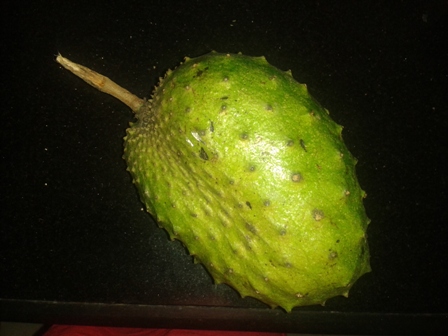
soursop

The fruit with prickles stocked in large quantities in the cart caught my attention. Though it is the season of  jack fruit, the fruit in offering looked a distant cousin of the same.

A close look spoke a different story all together. And the fruit vendor insisted that I buy one. To my ignorance, he added a chapter on the significance of the fruit, locally (Kerala)  referred to as ‘attichakka’, and “it is a healthy fruit for cancer patients.” As the Malayalam (language) name goes, the fruit is in fact a variety of jack fruit.

With a thick crust and custard apple like inner formation of white creamy edible pulp surrounding seeds, the fruit left a mixed taste of a tangy and citric custard apple.   Of course, the fruit did not fancy my palate, but my inquisitiveness led me to search. My quest landed me on Google, and with the information in hand I clicked the name ‘guyabano’. A further search led me to its English name ‘soursop’, called so because of its sour or rather acidic taste. In fact, its names were endless.

A native of South and Central America, the Caribbean and the Saharan parts of the African nations, soursop’s adaptability to the tropical climate has brought the fruit to the Southest Asian countries as well.

As a rich source of carbohydrates,  vitamins (mainly C & B) along with minerals such as potassium and dietary fibres, the fruit has become a staple with ailing patients. According to a well researched site , a research conducted in 1976 found a chemical in guyabano or soursop that is “10,000 times more powerful and potent than a drug used for chemotherapy called Adriamycin.”

To quote another site, “soursop consists of annonaceous acetogenins, which might stop the development of damaged cells just before they could become cancerous. {Also} soursop has demonstrated specific guarantee in eliminating cancer of the breast.”

Researches have also found its significance in various other treatments that include  regulating blood sugar, controlling hypertension, preventing anemia, and relieving pain and inflammation.

A fruit is a fruit anyway. Little wonder, the commercial market has utilised soursop to flavour candies, make drinks, and other  sweetmeat. Someday I hope to taste its other delicacies!

Going back to the fruit vendor’s information, the fruit comes to the market and gets sold out fastest, especially with the Regional Cancer Centre working in full swing and the families of patients taking good care of them. I looked at the humble fruit that hardly spoke but works wonders, definitely.