Tag: NaBloPoMo Nov 2014

The Cup That Cheers

The first cup of tea should be perfect, to perfect the way through the day. Relished to refresh and drained to pleasure, tea has been a serious concern in many households. It is not simply a mix of tea, sugar or milk. But how much of tea, to what length of boiling time, in milk or water, with more spoons of sugar – yeah! Every detail matters.

“It should appeal to our eyes. Its aroma should woo our sense of smell, and bring a smile as the first sip plays with the taste buds. Every cell in our body should wake up with pleasure.” A senior member in the family described the tea as a “thing of beauty”.

The first time I was asked to make a cup of tea, my mother instructed me – “Boil water in a pan. Remove it from the gas stove. Add tea leaves/powder (a spoon for a cup) . Wait for 2-3 minutes to allow the tea to settle down. Strain the tea into the cup. Then add warm milk and sugar to taste. Ensure, the tea does not look very strong.” Those were my school days. The thought brings a smile.

Now, if someone asks me to make a cup of tea, I scan mentally to decide “which method to choose” – “hold the tea bag for just a minute” , “boil milk, water and double quantity of sugar, before adding tea leaves” or “boil water, add milk, sugar and continue boiling with the tea leaves.” There are many more ways to do it.

When it comes to the first cup of tea in the morning, we are willing to forgo health tips and advice, often. But if we stick to the rules of making tea, then we should brew the tea leaves without letting it stew. Also, we can take a check on the quantity of milk and sugar.

Of course, there is no dearth of information on “how to make perfect tea”. However, with time one realises the question of perfection is purely a sensuous bliss, which differs from individual to individual, and household to household. Be it any brand of tea, preference may be for an Indian masala chai or the English tea, the sheer need is to please the palate with a Good Morning!
Want to Write, But Don’t Know How

Writing comes naturally. I agree. But when a student asked me, “How to write?”, I had to think differently. Reason, writing may come naturally but what makes a good writing requires serious preparations.

Learning to write well involves mastering the language, practicing daily and expressing well. Here are some tried and tested simple steps. For a quick read, I restrict them to FIVE points.

1. Reading improves language: Writing requires a good command over language and grammar. Whether you are planning to write in your mother tongue or English, it is through reading articles/ books regularly that, you can strengthen your language.

2. Begin slowly, but write daily: Forget what you have been doing all these years. If you are determined to write, make it a habit to write everyday. Always remember, practice makes a man perfect. In fact, it is by practicing that you develop your own style of writing.

3. Endless subjects and creative thinking: Without wondering “what should I write about”, select your subject/topic from things that inspire you. It can be a newspaper article on wrist watches, beautiful scenery on your way to a holiday destination, the baseball game you had viewed on the internet or your pet dog that keeps you company. Use words to the best and think creatively to make your subject interesting.

4. Re-writing, a practice tool: Sometimes, you may lack the confidence to deal with a subject on your own. However, you can make an attempt to rewrite an article from a newspaper or magazine, and realise your strengths and weaknesses.

5. Presentation and content matters: The aim behind writing is to convey your subject/topic very well. But it is a good presentation of the subject that draws attention of an audience. There is nothing to worry if you manage to write only a few sentences as a beginner. Gradually, you will master the art of expressing in pages.

Writing is a slow and steady process to a sure win. There are no short cuts to good writing. Hence, if you are a beginner, it is essential to remind yourself to be patient and keep working hard towards your goal.

Love Romance, Forever

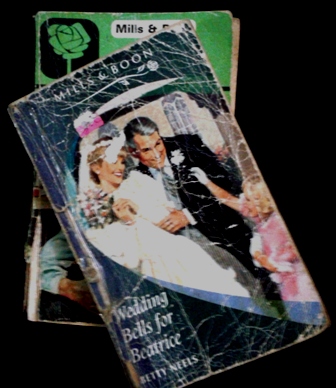
mills & Boon

“Have you read Mills & Boon ?”. A friend once asked me. “No,” I said. Surprised she looked. “Really!. Never.”

“Yes. Really,” I said.

Apparently, the stories to do with romance were earlier restricted to fairytale and classics. And there was Shakespeare. But I swear upon Jane Austen, and Pride and Prejudice will always be my favourite.

Much later in life, the same friend decided to lend me a romance-fiction from her Mills & Boon collection. As a reminder, she insisted on the works of Betty Neels, Anne Hampson, Helen Brooks, and Penny Jordan. Treading through the names, soon I found myself on reading-date with an endless list of authors!

As a matter of fact, I went to the second hand bookstores in search of earlier editions of Mills & Boon. I had taken a liking to reading those descriptive and expressive clean romances. All the more, it was a deliberate choice, because I could feel the authors in their work.

They did complete justice to their writing.

It was never those casual meandering with words, but complete involvement, exploring the emotions and lives of people. The best part is, I could enjoy every single element – visualise the people and places, understand the emotions and sentiments, relish the flow of words, and know the mind of authors.

Little wonder, Mills & Boon has grown to become the undisputed leaders in romance and fiction writing.

More recently, I got introduced to the works of American author Nicholas Sparks. Wonder how well an author can understand love in its various shades, stages of life, and the spiritual meaning to the word itself.

Indeed, love is an emotion beyond words. Indeed, the new generation authors have  different perspectives to love. Nevertheless, romance and love will work its way into the hearts of audiences across the globe.

My search for the old copies of Mills & Boon continues.

Who Gives Birth to Whom?

mahim “A child gives birth to a mother.” The quote runs below a public work of art on the way along side the western express highway in Mumbai. A prized location, the sculpture of the mother-and-child stands tall, seemingly linking the roads to Mahim, Bandra and Worli-sea link.

It is hard to miss, especially if you are on a religious trip to visit the famed Siddhivinayak temple (Lord Ganesha) at Prabha Devi , St. Michael’s church in Mahim, and the Durgah of Mahimi in Mahim. Each of these places is historically relevant. For instance, while the church is one of the oldest existing Portuguese buildings, the Makhdoom Ali Mahimi’s Durgah is a reminder of the great Sufi saint and scholar who was also the “first commentator of the Holy Quran in India”.

Coming back to the mother-and-child sculpture, I happened to take a sparing look at it once, when stuck at the traffic signal. Appearing to be of a mother holding up her child, the metal sculpture is devoid of any distinct features or facial expressions. Yet, surrounded by the bed of greens, the mother and child cut a happy picture of the nurturer and the nourished.

A few minutes distraction from the traffic snarl, the sculpture and the quote, “A child gives birth to a mother”, kindled my mind. Mother and child – who gives birth to whom? Undoubtedly, each gives birth to the other. Undoubtedly, the mother and child relationship rooting to birth can be correlated to the relationship of a creator and his creativity. Nevertheless, it takes the creativity to give a name to the creator, and a purpose of life.

Wonder, what could have been the mind-set behind its creation and its location? The sculpture of mother-and-child will withstand the years to come. Like the many curious onlookers, I may perceive the duo in a different light, on another occasion, a different day.