It is human nature to explore and expand in terms of wealth of knowledge. And in the process you come to know there is no dearth of matter. Click on the picture to read some such interesting facts.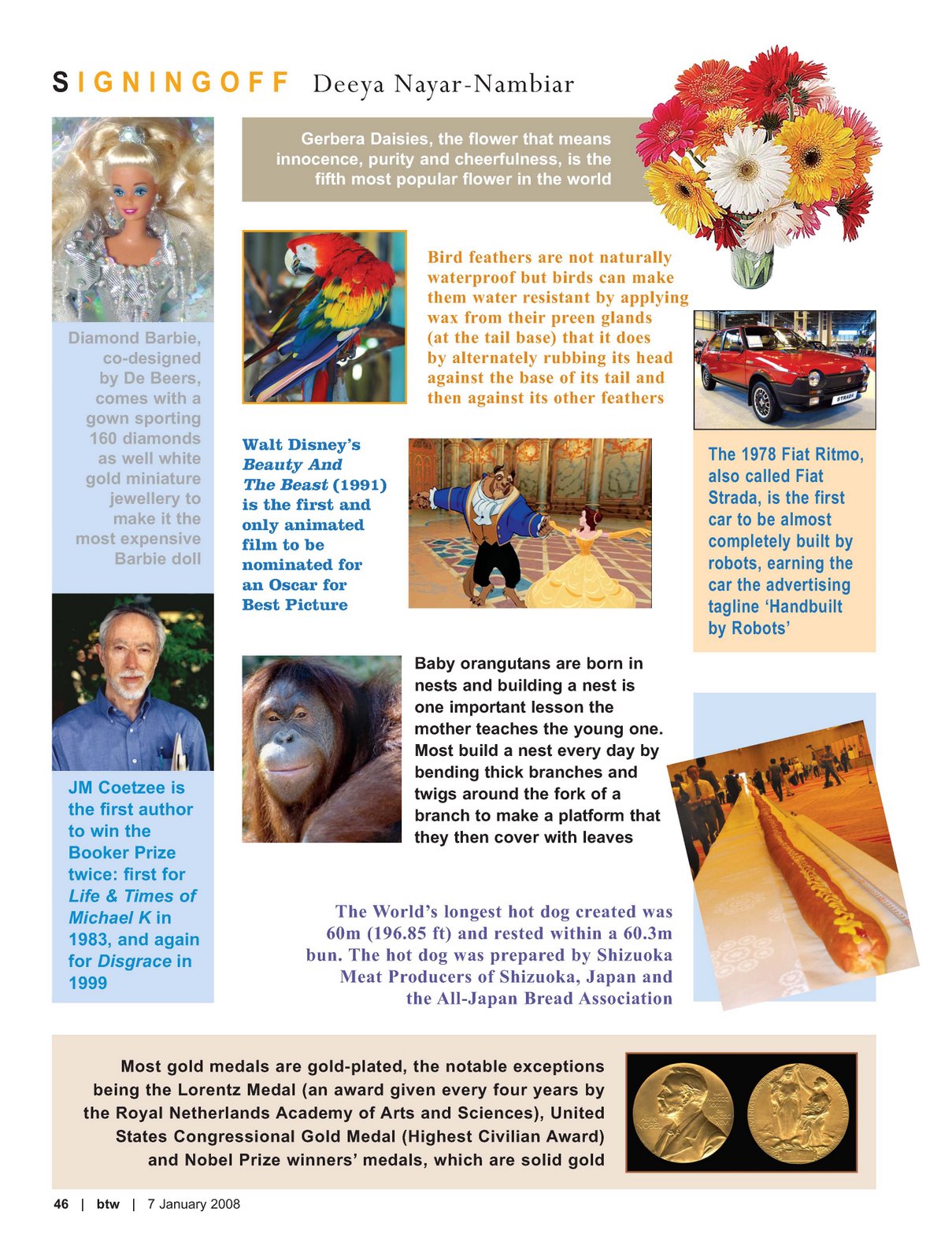
Author: Deeya Nambiar
I believe in taking every day as a learning phase, and exploring my writing skills. I have enjoyed the challenges as a journalist, content writer and college lecturer, and at the moment am living life analysing the extraordinary in the ordinary!

Fantastic To Be A Female

Imparting a wealth of information through a collection of anecdotes, Jacqueline Shannon’s book for girls gives a boost to their ego. By Deeya Nayar-Nambiar
Far away from the madding crowd of the saas-bahu serials, tears and indulging in self-pity, Why It’s Great To Be A Girl: 50 Awesome Reasons Why We Rule! is a perfect treat for all girls entering adolescence, giving them a brushing up on girl power and the need to recognise their hidden potential.
Women have done better things in life than just be known for being talkative. Not only do they speak more number of words, they are also good listeners. Girls are better at communicating their thoughts with instant messaging and they even have longer attention spans than boys do. Jacqueline Shannon has in an interesting way gives many anecdotes from all walks of life to prove her point.
There is probably a point in the brain pattern and the way women think, but history has witnessed women as change-managers and intruders who entered prohibited areas and came out with flying colours. Otherwise, we would have had only men as doctors and engineers.
Shannon wrote the book based on her daughter Madeline’s pre-school experiences – the gender bias that she encountered when she was asked what she wanted to be when she grew up to which she answered “a doctor” being just one instance.
Shannon is fair in her observations and without being prejudiced has tried to knit both the positive and negative aspects to her reasoning. Hence, though “the bad news is that women run fewer than 2 per cent of Fortune 500 companies…. the good news is that the number of woman-founded businesses continues to rise every year.” She takes pride in the fact that girls drive better than boys do.
Moving from its original version, Why It’s Great to Be a Girl: 50 Things You Can Tell Your Daughter To Increase Her Pride in Being Female (1994), the latest book is updated and expanded with the help of Madeline, who is now in college. In the process she has attempted to go global with her anecdotes to reach out to an international audience. Still, most of her anecdotes cater to American readers.
A wealth of information, a collection of anecdotes, Why It’s Great To Be A Girl: 50 Awesome Reasons Why We Rule! doesn’t promise to be a guide but is an attempt to boost your self-esteem. “The choice is ours, and even the sky is no longer the limit. That’s why now, more than at any other time in history, it’s great to be a girl, wonderful to be a woman, fantastic to be a female.”
Published in May 2008, btw of Chitralekha Group
Share this:

T&J: Cat and Mouse Game
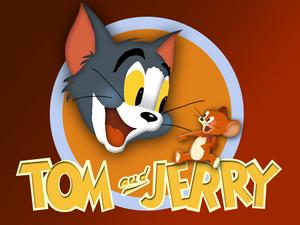
Tom and Jerry have won the most Oscars for cartoon characters. By Deeya Nayar-Nambiar
“It’s the Tom and Jerry Show”. The moment you hear the tune being aired on television, everybody irrespective of their age, gets glued to the show. Though it is more than 60 years since the first cartoon was made, the cat and mouse duo continue to steal the show. Endowed with human characteristics, the quick tempered and thin-skinned bluish grey housecat Tom is no match for the brains and wit of the independent and opportunist mouse Jerry. But the story which was once referred to as ‘yet another cat and mouse story’ gradually grew to become a big hit.
When Joseph Barbera, a storyman and character designer, was paired with William Hanna, an experienced director, to start directing films for the Rudolf Ising unit of MGM’s animation studio, a cat-and-mouse cartoon called Puss Gets the Boot released in theatres on February 10, 1940. It was the story of Jasper, a grey tabby cat trying to catch an unnamed rodent. Jasper was always threatened by the African-American housemaid Mammy that he’d be thrown out if he broke one more thing in the house. “O-U-W-T, out!” she screams. Though its release did not see much enthusiasm, this cartoon became a favourite with theatre owners and was even nominated for the Academy Award for Best Short Subject: Cartoons of 1941. Later, producer Fred Quimby commissioned Hanna and Barbera for a series featuring a cat and mouse. They felt a need to name the cat and the rodent and so held an intra-studio contest. And thus was born Tom and Jerry.
The basic theme of each shot is virtually the same – Tom makes frustrated attempts to catch Jerry and in the process destructs and creates havoc everywhere. Yet Hanna and Barbera found endless variations on that theme. No doubt there were thirteen entries in the Tom and Jerry series (including Puss Gets The Boot) nominated for the Academy Award for Best Short Subject: Cartoons. While seven of them went on to win the Academy Award, it broke the record of Disney studio’s winning streak in that category. In fact Tom and Jerry has won the most Academy Awards than any other character-based theatrical animated series.
In 1957 when the MGM animation department shut down, the cartoon series was outsourced. Though Tom and Jerry changed hands and production houses, nothing could create the magic of Hanna-Barbera. The 1980s witnessed the ‘babyfication’ of classic cartoon stars cat and mouse in the Tom and Jerry Kids Show, produced by Hanna-Barbera with Tuner Entertainment. In 2000 they came up with a new series entitled The Mansion Cat and later The Karateguard. Of course The Mansion Cat saw Jerry in a new light. The mouse was a house pet like Tom and their owner reminded Tom to not “blame everything on the mouse.” In spite of the years, even today the series and their re-runs keep the TRPs of cartoon channels running. The chase has not and will never end.
Published in November 2006, btw of Chitralekha Group
Share this:

Mean What You Say
It is easy to spoil relationships but building one is the art of communication
Read the complete article on the link provided

 Variety is the Spice of Life